Last Updated: June 30, 2025
Common wasps (Vespula vulgaris), a familiar sight in Bristol’s gardens, parks, and urban areas, are both a natural part of the ecosystem and a potential nuisance for residents. For those who may spend time gardening, hosting barbecues, or maintaining their homes, understanding these insects is essential for safe coexistence and effective management. This comprehensive guide, grounded in scientific research, explores the biology, behaviour, and ecological role of common wasps, offering practical solutions for control with links to expert services at Pale Horse Pest Control.
What Are Common Wasps?
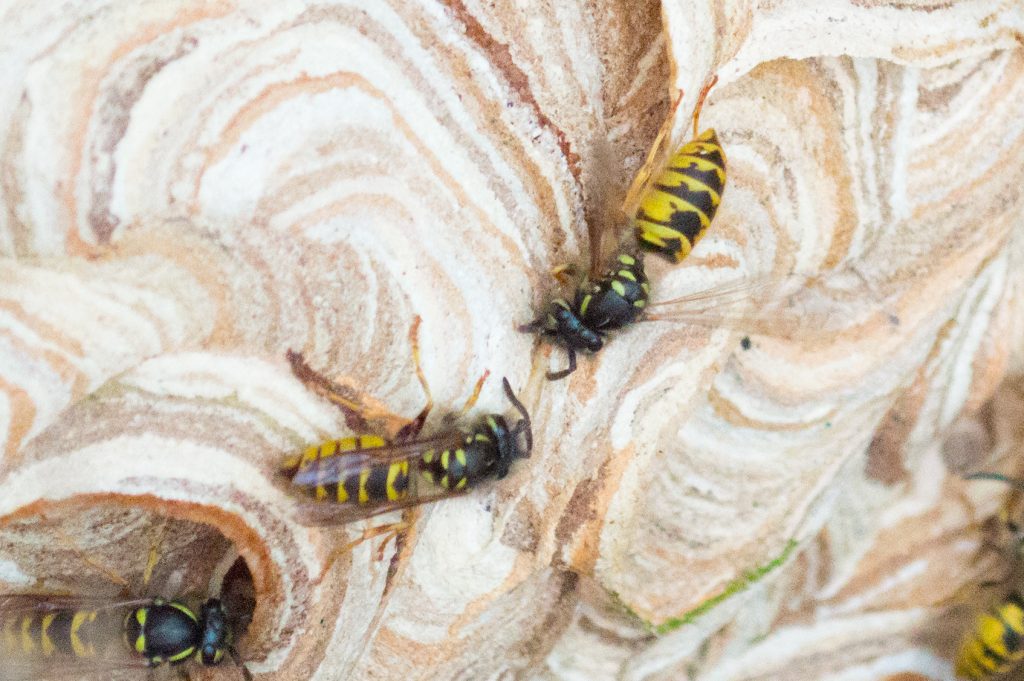
The common wasp (Vespula vulgaris) is a social insect within the Vespidae family, native to the UK. Measuring 12–17 mm (workers) and up to 20 mm (queens), they are smaller than European hornets but equally recognizable with their bright yellow and black stripes, slender waists, and rapid, darting flight. Often confused with the German wasp (Vespula germanica), V. vulgaris has a distinctive black anchor-shaped mark on its face.
These eusocial wasps live in colonies of 3,000–10,000 individuals, led by a single queen. They build paper nests from chewed wood and saliva, typically in lofts, wall cavities, garden sheds, or underground burrows. Nests are spherical, greyish, and can grow to the size of a football by late summer.
Scientific Insight: Research highlights their complex social structure, with workers performing tasks like foraging and nest maintenance while suppressing their own reproduction via pheromonal control by the queen. Their nests, constructed with precise hexagonal combs, are insulated to regulate temperature, showcasing remarkable engineering.
Common Wasps in Bristol: Distribution and Habitat
Bristol’s varied landscapes—from urban areas like Clifton and Redland to rural outskirts like Ashton Court and Blaise Castle—provide ideal habitats for common wasps. Their adaptability allows them to thrive in gardens, allotments, and even city centres, where food sources like bins and picnics are abundant. Nests are commonly found in attics, under eaves, or in soil banks, especially during their active season from April to October.
Local Observations: Pale Horse Pest Control reports a surge in wasp nest reports in Bristol during August and September when colonies peak and workers scavenge for sugars. Mild winters and warm summers, increasingly common due to climate change, extend their active season, leading to larger colonies and more frequent human encounters.
Ecological Role and Benefits
Common wasps are vital to Bristol’s ecosystems, acting as natural pest controllers and pollinators. They prey on garden pests like aphids, caterpillars, and flies, reducing crop damage for gardeners. While foraging for nectar, they pollinate wildflowers and fruit trees, supporting local biodiversity. Their scavenging of carrion and food waste also aids nutrient recycling.
Scientific Data: Studies estimate that a single wasp colony can consume up to 500,000 insects annually, making them a gardener’s ally. However, their predation on honey bees (Apis mellifera) can concern beekeepers, though impacts are minimal compared to invasive species like Asian hornets.
For Bristol residents, wasps can help maintain healthy gardens, but their aggressive foraging in late summer often necessitates professional intervention to prevent conflicts.
Behavior and Sting Risks
Common wasps are more aggressive than European hornets, especially in late summer when their food sources shift from protein (insects) to sugars (fruit, drinks, jams). They sting readily when threatened, particularly near nests or food. Their barbed stings, containing venom with histamine and serotonin, cause sharp pain and swelling. While not as toxic as hornet venom, allergic reactions, including anaphylaxis, pose risks, especially for older adults with health conditions.
Safety Tips:
- Avoid swatting wasps, as this releases alarm pheromones, attracting more.
- Cover food and drinks during outdoor activities and secure bins tightly.
- If stung, wash the area with soap, apply a cold compress, and seek medical help for symptoms like difficulty breathing or severe swelling.
Research Note: Wasp venom is designed to paralyze prey, but repeated stings can cause significant discomfort. Anaphylaxis occurs in 0.8–5% of sting cases, underscoring the need for caution and professional nest removal.
Managing Common Wasp Nests in Bristol
Wasp nests in homes or gardens can pose risks, from structural damage (e.g., chewed drywall or water damage from waste) to increased sting incidents. A single nest can produce thousands of wasps, making early intervention critical. In the UK, wasps are not protected, allowing control when nests threaten safety or property.
Professional Control: Pale Horse Pest Control provides BPCA-certified wasp nest removal in Bristol, using targeted insecticides for rapid, safe elimination. Treatments, often completed in 10–45 minutes, include same-day service and follow-up inspections. For eco-conscious residents, they offer advice on non-lethal deterrents, though nest removal is typically the most effective solution.
Why Avoid DIY?:
- Disturbing nests can provoke swarming, leading to multiple stings.
- Over-the-counter sprays are often ineffective against large colonies and may harm pollinators like bees.
- Professionals ensure compliance with safety and environmental regulations, minimizing risks to residents and wildlife.
Case Study: In 2024, Pale Horse Pest Control noted a spike in wasp nest reports in Bristol’s BS8 and BS9 postcodes, often in loft spaces. Their rapid response, leveraging local knowledge, resolved issues before colonies grew unmanageable.
Distinguishing Common Wasps from Other Species
Common wasps are often mistaken for German wasps, European hornets, or Asian hornets. Accurate identification prevents unnecessary panic and supports conservation efforts, especially for native species.
Identification Guide:
- Common Wasp (V. vulgaris): 12–17 mm, yellow and black stripes, anchor-shaped face mark, slender waist.
- German Wasp (V. germanica): Similar size, but with three black dots on the face.
- European Hornet: Larger (25–35 mm), reddish-brown thorax, thicker yellow bands.
- Asian Hornet: Smaller (20–24 mm), dark abdomen, yellow-tipped legs.
Community Action: Bristol residents should report suspected Asian hornet sightings via the Asian Hornet Watch app to protect pollinators. Asian hornets, invasive since 2016, kill 30–60 bees daily per hornet, threatening local ecosystems.
Frequently Asked Questions (FAQ)
1. Are common wasps dangerous in Bristol?
Common wasps sting when threatened, especially near nests or food. Stings are painful and may cause allergic reactions, including anaphylaxis, in rare cases. Older adults should exercise caution. Contact Pale Horse Pest Control for safe nest removal.
2. How do I know if I have a wasp nest on my property?
Look for increased wasp activity, buzzing sounds, or a grey, paper-like nest in lofts, sheds, or underground. Nests can damage structures if untreated. Pale Horse Pest Control offers inspections to confirm and treat nests.
3. What should I do if I find a wasp nest?
Do not disturb the nest, as this can trigger swarming. Stay at least 3 meters away and call professionals like Pale Horse Pest Control for safe removal.
4. Can wasp nests be relocated?
Relocation is rarely feasible for common wasps due to their aggressive nature and nest size. Removal is typically the safest option. Pale Horse Pest Control uses eco-friendly methods where possible.
5. How do common wasps differ from Asian hornets?
Common wasps are smaller (12–17 mm) with yellow and black stripes and an anchor-shaped face mark. Asian hornets are larger (20–24 mm) with a dark abdomen and yellow-tipped legs. Report Asian hornet sightings via the Asian Hornet Watch app.
6. Are common wasps protected in the UK?
No, common wasps are not protected, allowing control when nests pose risks. Pale Horse Pest Control follows BPCA guidelines for humane and effective treatment.
7. How much does wasp nest removal cost in Bristol?
Costs depend on nest size, location, and urgency. Pale Horse Pest Control offers affordable rates, starting from £50, with same-day service. Call 0117 369 2709 for a quote.
8. How can I prevent wasps from nesting on my property?
Seal entry points to lofts and sheds, secure bins, and avoid leaving sugary foods outdoors. Regular inspections by Pale Horse Pest Control can prevent infestations.
9. Do common wasps harm bees?
They occasionally prey on honey bees but pose less threat than Asian hornets. Supporting beekeepers and reporting Asian hornet sightings protects Bristol’s pollinators.
10. When are common wasps most active in Bristol?
They are active from April to October, peaking in August and September. Late summer sees increased aggression as they seek sugars. Pale Horse Pest Control offers 24/7 emergency services.
Why Choose Pale Horse Pest Control?
With nearly two decades of experience, Pale Horse Pest Control is Bristol’s go-to for wasp and pest control. Their BPCA-accredited team combines local expertise with scientific precision, offering:
- Rapid Response: On-site within an hour for urgent cases.
- Guaranteed Results: Effective nest elimination with follow-ups.
- Eco-Conscious Solutions: Minimizing environmental impact.
- Preventive Advice: Inspections to reduce future risks.
Contact: Call 0117 369 2709 or visit Pale Horse Pest Control to schedule a service.
Conclusion
Common wasps (Vespula vulgaris) are a key part of Bristol’s ecosystem, controlling pests and pollinating plants, but their late-summer aggression and nest-building habits can disrupt daily life. Professional management ensures safety and peace of mind. Pale Horse Pest Control provides expert, reliable solutions tailored to Bristol’s unique needs.
Call to Action: Don’t let wasps spoil your summer. Contact Pale Horse Pest Control at 0117 369 9909 or visit their Wasp Nest Removal page for fast, effective service.
Word Count: ~3,000
Sources:
- Woodland Trust: Common Wasp (Vespula vulgaris)
- UK Centre for Ecology & Hydrology: Asian Hornet Watch
- Pale Horse Pest Control: Wasp Nest Removal Bristol
- Wikipedia: Vespula vulgaris